 Pakistan Image
By: Sarfaraz Shah
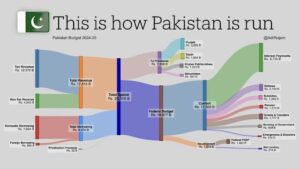
Budgets are more than spreadsheets and pie charts — they are blueprints of power, priorities, and political intent. While they promise transparency, their structure often conceals more than it reveals, masking systemic imbalances and policy choices behind layers of technical jargon. This piece explores the deeper narratives hidden within federal and provincial budgets in Pakistan, using visualizations to unravel how public money flows, what it reveals about governance, and why rethinking the budget narrative is crucial for meaningful reform and inclusive development.
1. The Transparency Paradox
Budgets are often hailed as the most transparent instruments of governance, offering rows of numbers and projections for public scrutiny. Yet, they are also masterclasses in concealment — strategically structured to obscure vital details while appearing clear and comprehensive. What is laid out in tables and charts frequently hides more than it reveals, camouflaging policy priorities and systemic flaws in plain sight.
2. Purpose Beyond Policy
This piece does not aim to dissect fiscal policy or pass judgment on budgetary decisions. Rather, its purpose is to make visible the often-confusing paths government money takes — to trace the veins and arteries of national and provincial fiscal flows. Through visualizations, we seek to render these complex systems more accessible and understandable to citizens and observers alike.
3. Budgets as Societal Mirrors
While budgets are not the economy in themselves, their influence on economic indicators like growth, inflation, and employment is profound. Budgets are planning tools — forward-looking frameworks based on assumptions and projections. They also serve as decision-making documents that indicate what the government chooses to tax and where it decides to spend. Beyond numbers, they are moral statements, revealing what a society values, deprioritizes, or altogether ignores.
4. Patterns from Fiscal Visuals
Analyzing federal and provincial budget visualizations exposes consistent and troubling patterns. A major share of fiscal resources is consumed by debt servicing, leaving little for essential development. Development spending, where it exists, is often unimaginative and mismatched to the needs of a population exceeding 250 million. Meanwhile, budget plans lack clear strategic direction, with over-reliance on taxing already-burdened segments instead of exploring cost-side reforms.
5. The Energy Black Hole and Provincial Roles
The energy sector continues to absorb massive amounts of money, with little return in productivity or reform. At the same time, provinces, despite limited fiscal capacity, possess relative autonomy in decision-making. Their role as key actors in shaping national outcomes becomes evident, especially when visualized holistically rather than through isolated budget documents.
6. Budget Surprises Hidden in Plain Sight
Some revelations stand out. For example, Rs274 billion marked as “Net Lending” appears to be a veiled bailout for loss-making public-sector enterprises — surpassing the entire infrastructure budget. SUPARCO’s Rs35.6 billion allocation hints at a potential space initiative, likely in collaboration with China. Even terminology matters: “External Receipts” is often code for increased foreign borrowing, a euphemism that masks growing debt reliance.
7. Regional Gaps and Priorities
Visual comparisons reveal stark discrepancies among provinces. Sindh, for instance, allocates more to education than Punjab, while pension and salary expenses differ sharply. Health, however, emerges as a shared priority across provinces, potentially indicating a shift in collective focus, even as education remains under-emphasized in broader fiscal decisions.
8. Rethinking the Budget Narrative
In the end, visualizing the budget is more than a technical exercise — it is a political and moral one. It surfaces hard truths and missed opportunities. As fiscal challenges grow more urgent, so does the need to reform how budgets are designed, communicated, and implemented. Only then can they begin to truly reflect national values and support effective, inclusive governance.
To sum up, in a country where fiscal choices shape the contours of daily life, budgetso must be more than cryptic spreadsheets — they should be tools of clarity, accountability, and empowerment. By making these financial blueprints visually comprehensible and morally transparent, we not only demystify public spending but also invite broader citizen engagement in governance. True fiscal reform begins not just with better numbers, but with better narratives — ones that reflect collective aspirations rather than conceal inconvenient truths.


